SEG System Guides for Fabric and Frame Compatibility
Prepare a SEG order by identifying the complete frame, fabric panel and edge-strip specification. Nominal display dimensions are only part of the information needed. Check the channel, finishing allowance, printed faces and any lighting requirements before ordering new consumables or replacement graphics.
These guides are intended for display buyers, print workshops and teams using edge-mounted textile systems. They help collect the technical information for a compatibility check. The actual manufacturer's specifications and instructions govern panel production, fitting and installation.
Distinguish the construction from the appearance
The SEG versus tube tension fabric guide compares two fixing approaches. A fitted skin or sleeve for a tube structure is different from an edge-mounted panel fitted into a matching frame channel. Similar visible dimensions do not make the graphics interchangeable.
Start with the frame reference and photographs of the attachment. Identify whether the display is illuminated and whether it has one or two graphic faces. Keep those details with the print template, so replacement decisions are based on the installed system rather than on a photograph of its message.
Match keder width thickness and material
The keder width guide explains the current roll options and the information needed to choose between them. SEG Keder Tape Rolls lists 10, 12 and 14 mm widths, all 3 mm thick, on complete 50 m or 200 m rolls. The available technical sheets identify those variants as PVC.
The industry term SEG is not proof that every compatible edge strip has the same material. Match the cross-section and finishing to the actual frame specification. When changing a consumable, confirm the proposed panel in the real frame before repeating the production process across a batch of graphics.
Keep workshop consumables separate from finished systems
A roll supplies edge material for producing textile graphics. It does not include the fabric, printing, sewing or display frame. Identify the supply unit and production requirements when asking for an offer so a material roll is not compared with a completed panel.
The Keder Roll Storage and Unwinding Stand is workshop equipment. Confirm its suitability for the roll dimensions and core arrangement being used; it is not a component installed in the finished display. Keeping rolls labelled by specification helps avoid substituting an available width for the width actually required.
Compare the complete display specification
NEO SEG Fabric Wall Systems and SEG Lightboxes provide different models and configurations. Check assembled dimensions, supports, printed faces, lighting and transport as one specification. A shared system name does not establish common panels or identical installation methods.
For a lightbox replacement, confirm the textile and print process appropriate for its lighting. Record the electrical arrangement and how components are handled during transport. A non-illuminated fabric panel should not be assumed suitable simply because it appears to fit the same outside dimensions.
Follow the panel-fitting instructions
Use the SEG graphic installation guide to prepare the checking sequence. Identify the frame and panel, orient the print and inspect the channel and stitching. Follow the supplied installation order and stop if the expected fit cannot be achieved without forcing the material.
If a panel appears loose, too tight or uneven, compare the actual dimensions and strip specification with the approved order. Take photographs of the complete display and affected details. Do not assume that stretching the fabric or changing strip thickness solves every problem.
Preserve references for replacement orders
Keep the frame model, approved panel dimensions, template, textile and edge specification together. Label graphics by face and artwork version. A retained correctly identified sample can be useful when checking a replacement or a changed production process.
Browse SEG and Fabric Tension Displays for complete systems. Send the frame and channel details with the required quantity, graphic scope and delivery date to discuss compatibility before material is cut or sewn. This connects workshop decisions to the finished display rather than treating edging, fabric and frame as unrelated purchases.
Guides for your next decision
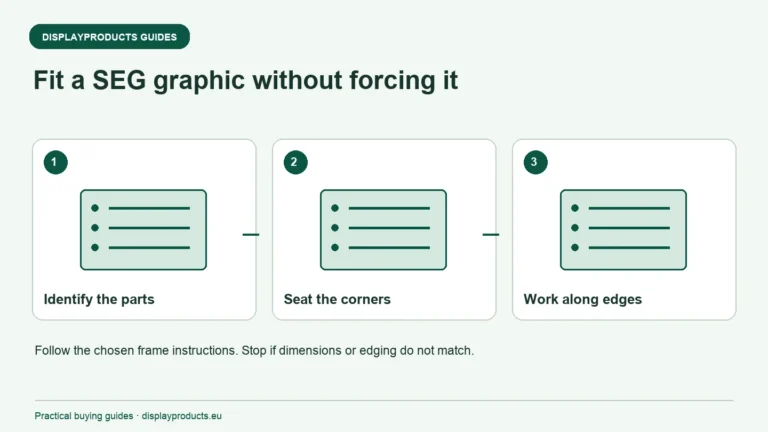
Installing a SEG Fabric Graphic Step by Step
Install a SEG graphic only after confirming that the panel and frame are a matched specification. Identify the model, orient the graphic and follow the supplied frame instructions.
Read the guide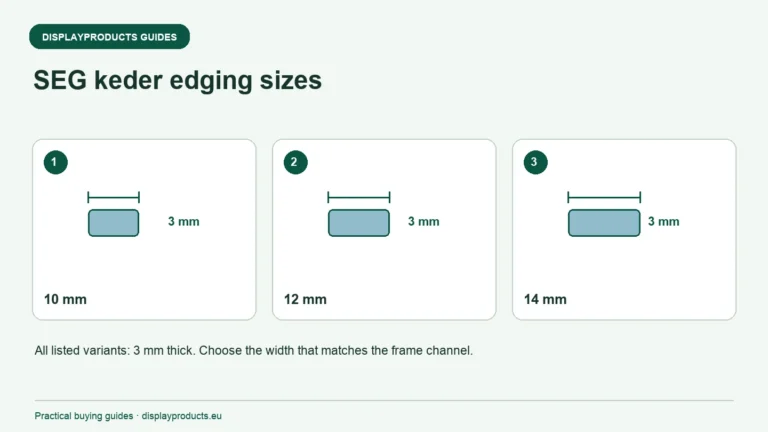
How to Choose SEG Keder Tape Width
Choose SEG keder tape by the channel and finished graphic specification of the frame it will be used with. Match the strip width, thickness and material to a working specification before ordering a roll.
Read the guide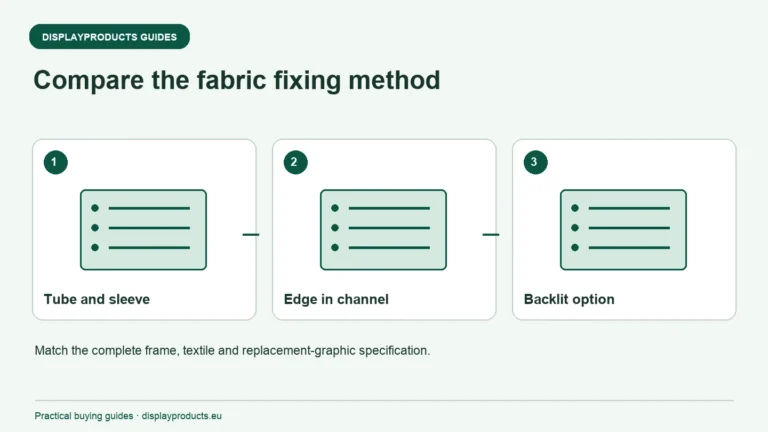
SEG Displays vs Tube Tension Fabric Walls
Compare SEG displays and tube tension fabric walls by the way the graphic attaches to the frame, the complete assembled footprint and the replacement-print specification. Both can create a substantial fabric display, but their panels are not interchangeable.
Read the guide