Choose SEG keder tape by the channel and finished graphic specification of the frame it will be used with. Match the strip width, thickness and material to a working specification before ordering a roll. A wider strip is not automatically a better fit, and a roll labelled for SEG use does not prove compatibility with every fabric frame.
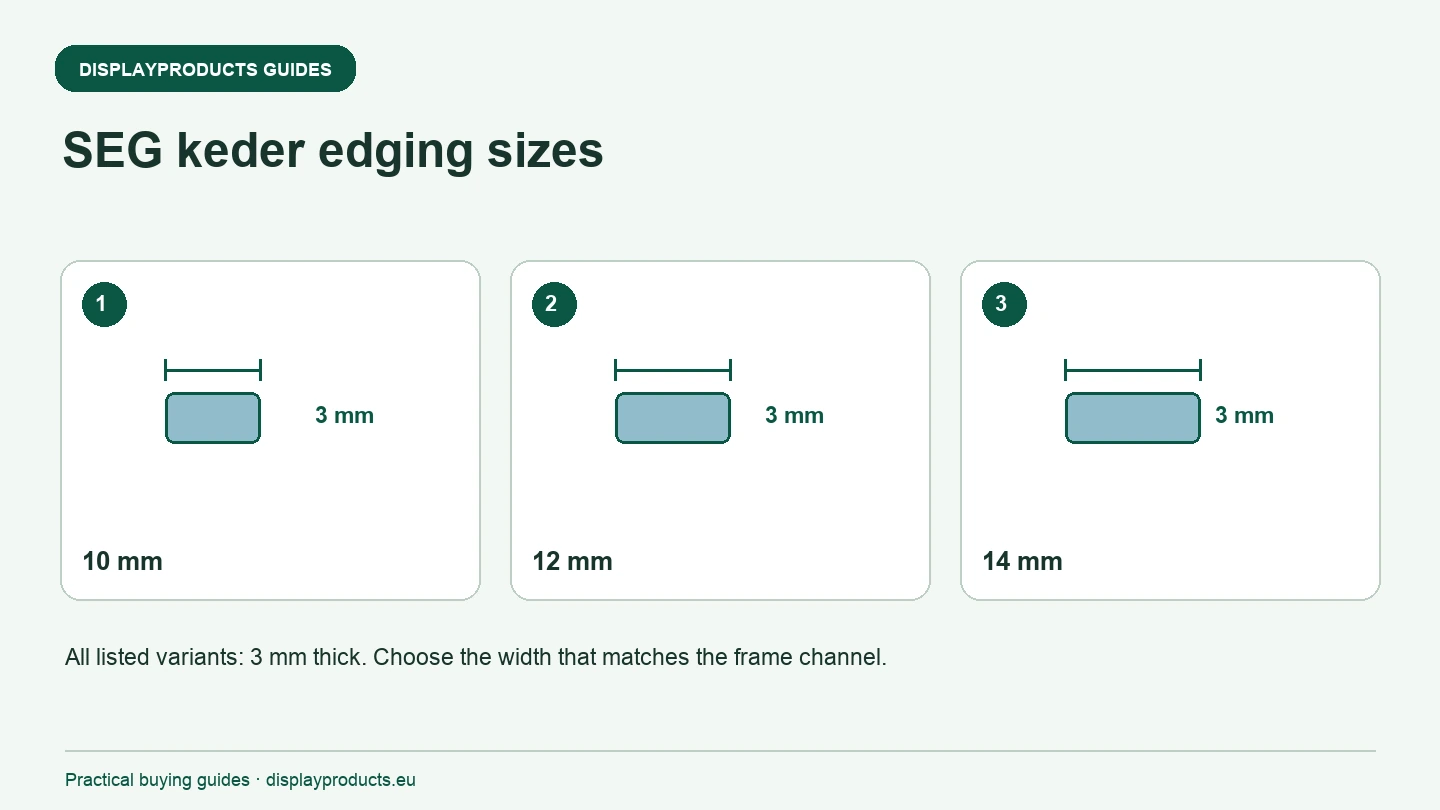
The current SEG Keder Tape Rolls range contains 10, 12 and 14 mm widths. All six listed width-and-length variants are 3 mm thick, with complete 50 m or 200 m rolls. Their technical sheets identify the material as PVC. These are supply options for producing graphics, not a universal recommendation for every channel.
Identify the frame before measuring the strip
Record the frame model and profile, and find the specification used for its current graphics. If the existing panel fits correctly, retain a labelled sample of its edge strip and record the finished graphic dimensions. A photograph of the profile and a measurement of the fitted strip can help when the original order reference is missing.
Do not identify the strip only by the visible graphic width or the outside frame dimensions. The channel, finishing method and fabric-panel allowance are separate details. If a replacement strip is meant to fit an unfamiliar frame, ask for a compatibility check before producing a batch of panels.
Compare width thickness and material together
Width describes one dimension of the strip; thickness is another. The current roll range has the same listed thickness across its three widths, but that does not establish that each width fits the same channel. Check the complete cross-section and the way the strip is sewn into the graphic.
SEG is commonly expanded as silicone edge graphics. That industry term should not be used to relabel a particular consumable. For this roll range, the available technical sheets state PVC. If your specification calls for a different material, make that requirement explicit and confirm the actual variant rather than substituting a strip solely because the dimensions sound similar.
| Available strip width | Listed thickness | Roll options | Selection rule |
|---|---|---|---|
| 10 mm | 3 mm | 50 m or 200 m | Match the frame and working graphic specification |
| 12 mm | 3 mm | 50 m or 200 m | Confirm the cross-section and finishing allowance |
| 14 mm | 3 mm | 50 m or 200 m | Do not assume that a wider strip fits a smaller channel |
Confirm the sewing and panel allowance
The edging is sewn around the fabric panel before it is fitted into a compatible frame. It is not an adhesive tape applied to a finished poster. The sewing team must use a method and finished-panel allowance appropriate for the textile, strip and frame system.
Keep the same confirmed specification around a panel unless the manufacturer's instructions require something else. Changing strip dimensions on one edge can change the way the graphic fits. Ask the person producing the panel to check the strip position, stitching and finished dimensions together rather than approving the roll material in isolation.
If you are changing a consumable supplier or specification, make a correctly identified test panel before repeating the process across a large order. Check its fit in the actual frame using the specified installation method. Record the approved combination so the next job is not judged against an unlabelled leftover strip.
Choose roll length from production needs
The listed 50 m and 200 m variants are complete rolls. Compare the roll length as well as the price basis. A price for one roll cannot be compared fairly with another length without accounting for the quantity of edging supplied.
Estimate the edging needed from the production specification, including the graphic perimeter and any process allowance determined by the sewing team. Do not confuse the roll length with the number of finished panels. Keep different widths clearly identified in storage so a longer available roll is not substituted for the specified width during a busy run.
Keep workshop equipment separate from the graphic system
The Keder Roll Storage and Unwinding Stand is a production accessory for holding and drawing material from a roll. It is not part of the installed fabric frame, and its price does not include the roll shown in the operating photograph. Confirm roll diameter, core arrangement and the holder's suitability for your supply format before ordering.
For a finished system, compare NEO SEG Fabric Wall Systems and other frames in SEG and Fabric Tension Displays. The availability of a frame and an edging roll on the same website does not, by itself, establish that the selected variants are a matched combination.
What to send for a compatibility check
Send the frame model, a photograph of its channel, the dimensions and material of the existing strip, the textile specification and required roll quantity. Include the intended panel-production method and any original technical sheet or order reference available to your team.
State whether the request is for consumable rolls, a finished replacement graphic or a complete display. Printing, fabric, sewing and frame hardware are separate parts of the specification. A clear request helps check the actual requirement before material is cut or sewn. For the broader installation process, read the SEG graphic installation guide and keep the selected frame's instructions alongside it.