Exhibition Planning Guides for Business Display Sets
Plan an exhibition display set around the actual floor plan, the activity on the stand and the people who will operate it. Start by recording the available space and open sides, then assign a job to the main wall, counter and supporting graphics. This helps compare complete usable sets instead of buying individual products that compete for the same area.
The guides here connect layout, display construction, artwork and ordering. They are intended for business exhibitors and agencies preparing a reviewable specification. The organiser's requiveiligheidssluitingents and the selected products' instructions govern the final installation.
Begin with the plot and visitor route
Record dimensions, open sides, permitted height and anything the organiser supplies. Add the complete footprint of the proposed frames and supports, the positions where staff work and the equipment used for demonstrations. Graphic width alone does not show how much floor space the stand occupies.
Gebruik de Handleiding voor de indeling van een 3x3 beursstand to compare an inline, corner and demonstration arrangement. The illustrations show different planning choices. They are not installation drawings or a promise that any nominal 3 m frame fits every 3 m plot. Confirm real product dimensions and required clearances before approving the layout.
Give the displays separate communication roles
Choose the main message visitors should understand from the aisle. Put supporting detail where someone who has stopped can use it. A wall, counter and banner work together when each has a defined role; adding more graphics without that decision can make the offer harder to read.
De exhibition event ideas guide helps assign those roles. Wanden van gespannen textiel is a starting point for a backdrop, while Stoffen toonbanken can support a conversation or a suitable demonstration. Check the selected versions' footprints and requiveiligheidssluitingents against the actual activity.
Compare the construction behind the names
Roll-up, pull-up and pop-up are not equally precise descriptions of a structure. The banner-format comparison explains why the model and graphic fixing matter. A retractable banner and a frame-based fabric display may serve different roles even when their promotional names sound similar.
For a larger set, Tentoonstellingsstands van gespannen textiel provides configuration examples within one system. Identify the actual supplied parts, printed faces and connections. A gallery image is a starting point for the proposal, not proof that every illustrated configuration is included in one order.
Plan the whole event cycle
Include packed dimensions, transport, loading access and the people installing the kit. Identify any supports, lighting or other items carried separately. A convenient main frame may still be part of an awkward complete set, particularly when the venue route includes stairs or a long walk from unloading.
For repeat events, record the components and graphics you expect to retain. Keep model references, approved templates and photographs together. Use the kosten per evenement gids to compare your own confirmed initial and later costs for the same event programme.
Prepare artwork after the system is identified
Give every print face a component and version reference. Confirm the production template, finished dimensions, fixing allowance and approval responsibility. A fabric skin, edge-mounted panel and retractable sheet are different specifications. The checklist voor grootformaat kunstwerken helps organise that review.
If a lightbox or another illuminated element is part of the proposal, confirm its graphic media and electrical arrangement. Keep those requiveiligheidssluitingents with the layout so lighting is not added as an unexplained last-minute accessory. If the venue requires particular documentation, state that before production approval.
Send one consistent project brief
Gebruik de checklist voor tentoonstellingspresentatie to collect the plot, intended activity, existing equipment, graphics and delivery information. Identify whether the offer should include hardware, printing, supports, transport or any additional service. Request confirmation of the actual order's approval and arrival dates.
Bladeren Tentoonstellingsstands En Reclamewanden en achterwanden for the product families. When you are ready, send your display project with the floor plan, quantities, event date and delivery country. A connected specification helps the supplier check the set and gives the installation team an understandable packing and setup list.
Richtlijnen voor uw volgende beslissing
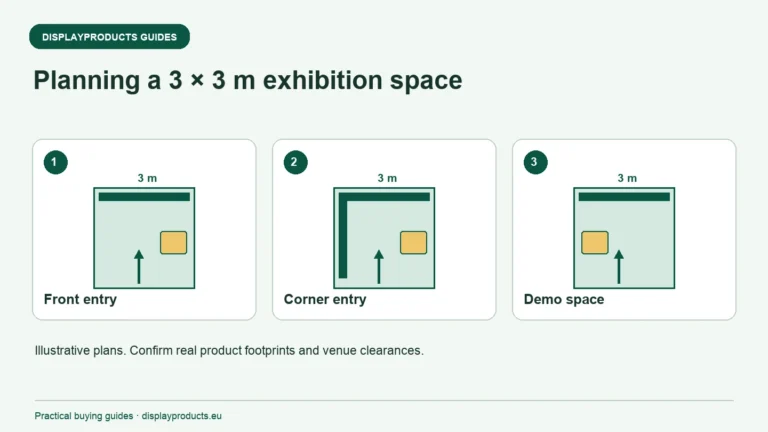
3x3 beursstandindelingen voor kleine teams
Een beursstand van 3 × 3 meter biedt negen vierkante meter, maar de bruikbare ruimte hangt af van de open zijden, de diepte van de displayvoeten en de activiteiten die u wilt faciliteren.
Lees de handleiding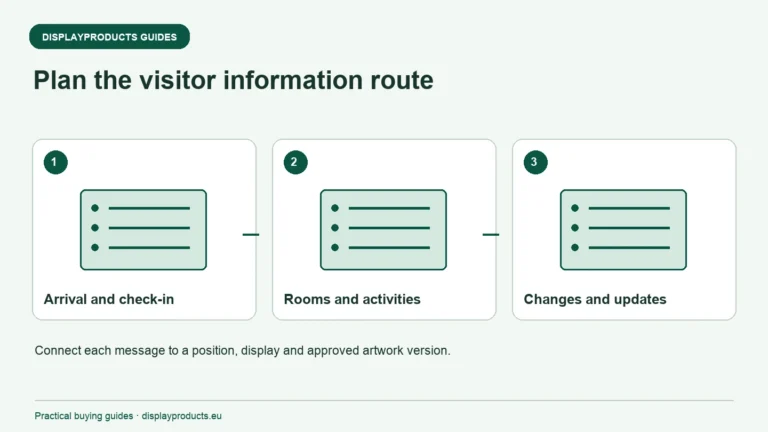
Checklist voor evenementbranding: ingangen, displays en bewegwijzering
Stem de branding van het evenement af op de route die de bezoeker aflegt: het vinden van de locatie, het herkennen van de ingang, het inchecken, het vinden van de juiste ruimte en het begrijpen van de volgende stappen. Wijs aan elk scherm een boodschap en een positie toe op die route.
Lees de handleiding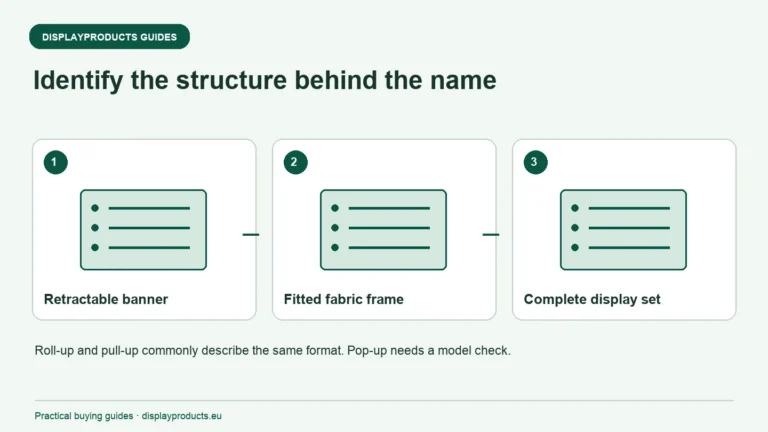
Pop-Up vs Pull-Up vs Roll-Up Banners
Pull-up en roll-up beschrijven meestal hetzelfde oprolbare bannerformaat: de bedrukte afbeelding wordt vanuit een basis omhooggetild en door een steunpaal vastgehouden. Pop-up is minder precies. Deze term kan in bredere zin gebruikt worden voor een verplaatsbare banner of voor een ander type display met een frame.
Lees de handleiding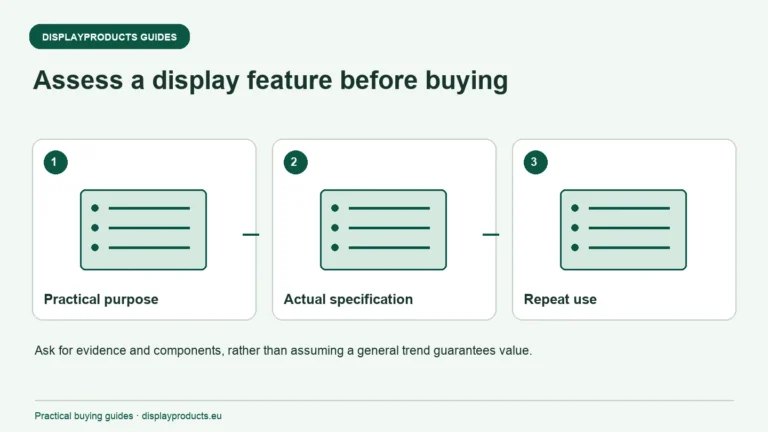
Weergavetrends om te analyseren vóór uw volgende campagne.
Bij het beoordelen van trends in de presentatie van producten, is het belangrijk om te bedenken of een voorgestelde functie daadwerkelijk bijdraagt aan het evenement of de campagne. Vervangbare afbeeldingen, aanpasbare lay-outs, verlichte textielproducten en links naar digitale content kunnen allemaal nuttig zijn.
Lees de handleiding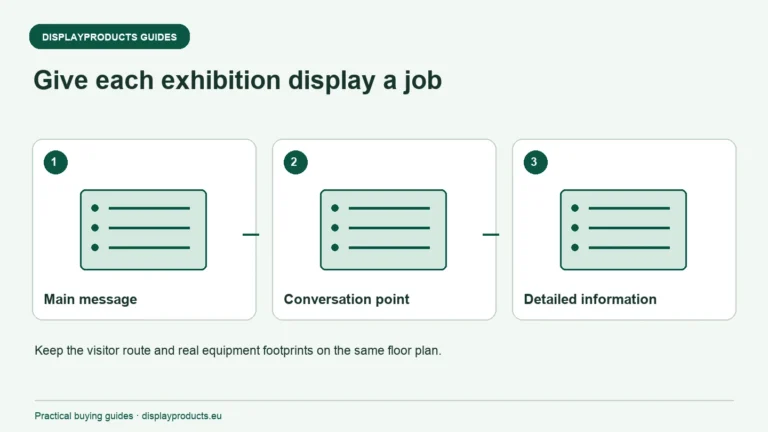
Ideeën voor een overzichtelijke en functionele stand op een beurs.
Zorg ervoor dat een beursstand functioneel is door elk onderdeel van de presentatie en activiteit een doel te geven. De belangrijkste afbeelding moet het aanbod duidelijk maken, de indeling moet bezoekers uitnodigen om de stand te benaderen en de interactiepunten moeten het gesprek stimuleren.
Lees de handleiding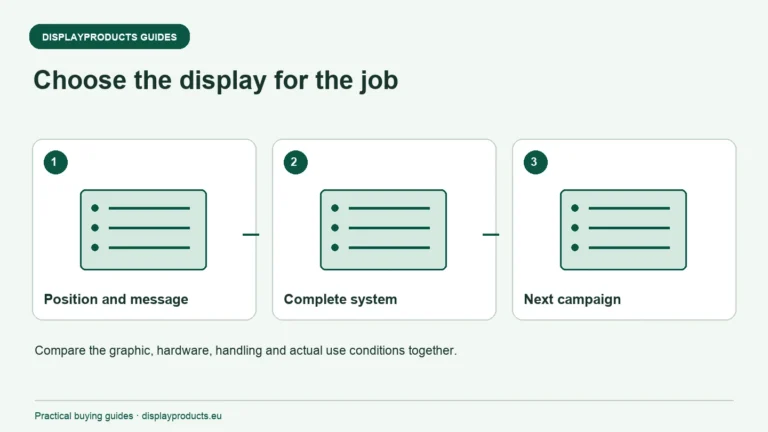
Hoe kies je het juiste scherm voor je bedrijf?
Kies een display op basis van de functie die het moet vervullen, de plaats waar het komt te staan en hoe het opnieuw gebruikt zal worden. Begin met de boodschap en de beschikbare ruimte, en vergelijk vervolgens het frame, de afbeeldingen, de hantering en de installatievereisten als een compleet geheel.
Lees de handleiding