Os termos pop-up, pull-up e roll-up são frequentemente usados como sinônimos — e, em muitos casos, referem-se à mesma coisa. Mas existem distinções importantes que vale a pena entender, especialmente quando você está tentando escolher o display certo para uma aplicação específica. Saber o que cada termo realmente descreve ajudará você a tomar decisões melhores e evitar confusões na hora de fazer o pedido.
Banners roll-up: o formato mais comum
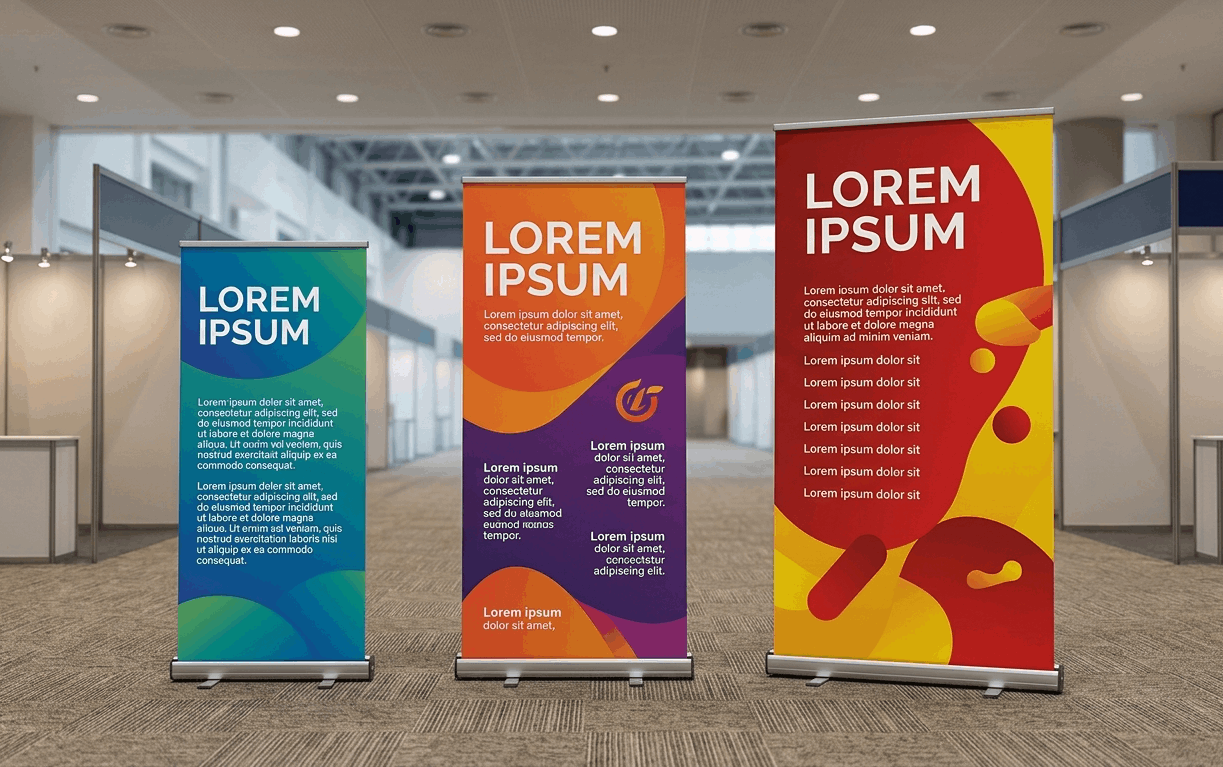 Um banner roll-up é exatamente o que o nome indica: uma imagem impressa que se enrola em uma base compacta para armazenamento e transporte. A imagem é fixada a um mecanismo retrátil dentro da base e, quando você estiver pronto para usá-lo, basta puxá-la para cima e prendê-la a uma haste de suporte que se encaixa na base.
Este é o formato que a maioria das pessoas entende quando diz "pop-up" ou "pull-up" — e é de longe o sistema de banner portátil mais utilizado para... exposições, eventos corporativos, e ambientes de varejo. banners roll-up São autossustentáveis, leves e podem ser montadas por uma pessoa em menos de um minuto, sem ferramentas.
As larguras padrão são geralmente de 800 mm, 850 mm, 1000 mm ou 1200 mm, com alturas em torno de 2000 mm. A imagem é normalmente impressa em PVC ou tecido, e a base abriga o mecanismo de retração com mola. A qualidade varia significativamente — os modelos mais baratos usam componentes de plástico que se desgastam rapidamente, enquanto as versões premium apresentam cassetes de alumínio e sistemas de retração suaves e confiáveis que duram anos.
Os displays roll-up são ideais quando você precisa de uma solução portátil e reutilizável, que se dobra de forma compacta e é fácil de transportar. Funcionam bem como displays independentes em áreas de recepção ou eventos menores, e como elementos de apoio a displays maiores. sistemas de backwall e estandes de exposição em shows maiores.
Banners retráteis: mesma coisa, nome diferente.
Na prática, "banner retrátil" e "banner de enrolar" significam a mesma coisa. Os termos descrevem a ação: você puxa a imagem da base para cima e a fixa. Alguns fornecedores preferem um termo ao outro, mas funcionalmente não há diferença.
A confusão surge porque o próprio mecanismo pode variar. Alguns sistemas usam um rolo com mola, outros usam um sistema de retração manual e alguns usam hastes de tensão em vez de rolos. Mas o resultado final é o mesmo: uma faixa autoportante que se retrai para dentro da sua base para transporte.
Ao fazer seu pedido, concentre-se menos no nome (pull-up ou roll-up) e mais na qualidade da construção, no material gráfico e se o sistema permite a substituição da arte. Uma base de banner bem feita pode ser reutilizada indefinidamente com novas impressões, tornando-se um investimento muito melhor do que uma unidade descartável que precisa ser substituída após alguns eventos.
Displays pop-up: uma categoria mais ampla
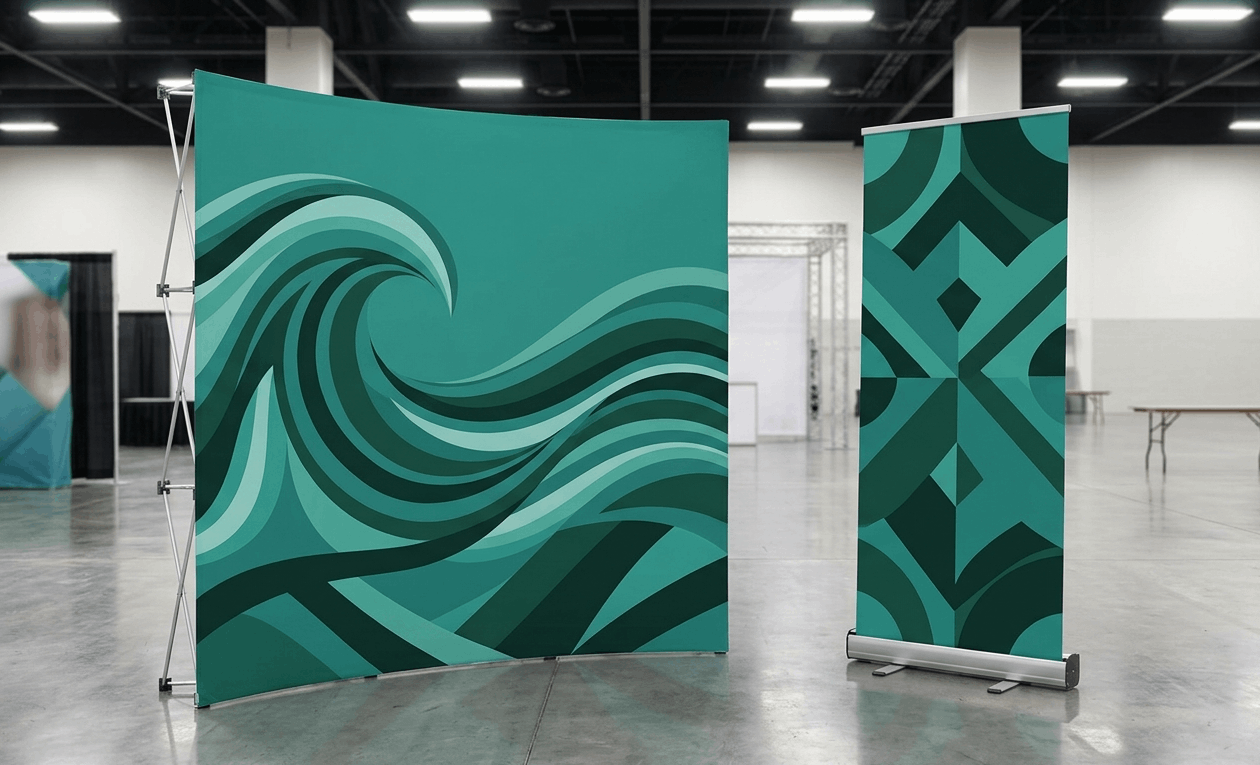
“"Pop-up" é um termo mais amplo que pode se referir a banners enroláveis, mas geralmente descreve sistemas de exibição modulares maiores que "aparecem" em formatos diversos — normalmente painéis de fundo curvos ou retos que utilizam uma estrutura dobrável com tecido ou painéis gráficos esticados sobre ela.
Painéis traseiros retráteis e indicadores de tensão do tecido São comuns em feiras comerciais onde os expositores precisam de um painel de fundo grande e profissional sem a complexidade de um estande personalizado. A estrutura se expande em formato de acordeão e os painéis gráficos de tecido são fixados por meio de tiras magnéticas, velcro ou bordas de silicone. A montagem leva mais tempo do que um banner roll-up — geralmente de 10 a 20 minutos — mas o impacto visual é significativamente maior.
Os sistemas pop-up são modulares, o que significa que você pode combinar vários painéis para criar diferentes configurações, dependendo do espaço disponível. Eles são desmontáveis e acondicionados em estojos com rodinhas, tornando-os relativamente portáteis apesar do tamanho. Os painéis gráficos são substituíveis, permitindo que a mesma estrutura seja usada em diversas campanhas com mensagens atualizadas.
Se você expõe regularmente em feiras comerciais e precisam de uma presença marcante, uma parede de fundo retrátil combinada com banners roll-up, balcões, e estandes promocionais Cria uma configuração completa e profissional.
Quando usar cada formato
A escolha entre um banner roll-up e um sistema pop-up maior depende da escala, do orçamento e da frequência de uso.
Utilize banners roll-up quando:
- Você precisa de um equipamento portátil para uma única pessoa.
- O espaço disponível é limitado.
- Você está participando de eventos menores ou apoiando uma exposição maior.
- O orçamento é limitado ou você está testando um novo evento antes de investir em telas maiores.
- Você precisa de vários banners para diferentes locais ou mensagens.
Utilize painéis de fundo retráteis e sistemas maiores quando:
- Você tem um espaço de exposição dedicado e precisa preenchê-lo.
- Presença de marca e impacto visual são prioridades
- Você participa de feiras e exposições regularmente e precisa de um sistema profissional e reutilizável.
- Você quer criar um espaço definido em vez de apenas uma faixa isolada.
- Você está combinando vários elementos — parede de fundo, bancadas, expositores suspensos — em uma posição coesa
Nenhuma é melhor que a outra — elas servem a propósitos diferentes. Muitos expositores usam ambas: um painel de fundo retrátil como elemento central, com painéis de enrolar nas laterais para mensagens adicionais ou para delimitar o espaço.
A qualidade da construção importa mais do que a terminologia.
Quer você o chame de banner enrolável, retrátil ou pop-up, a qualidade do mecanismo e dos materiais determinará sua durabilidade e sua aparência após uso repetido.
Bases baratas para banners deformam, emperram ou desenvolvem tensão irregular, fazendo com que a imagem fique flácida ou enrole. Hastes frágeis dobram com facilidade e pés mal projetados criam instabilidade. Invista em um sistema bem construído com uma estrutura de alumínio ou reforçada, deslizamento suave dos roletes e uma base estável — ele durará mais do que três ou quatro alternativas mais baratas.
O mesmo se aplica aos elementos gráficos. O PVC fino risca e amassa com facilidade. Impressões em vinil ou tecido de melhor qualidade mantêm a cor e permanecem firmes ao longo do tempo. Se você usa a faixa regularmente, opte por elementos gráficos substituíveis para poder atualizar as mensagens sem precisar trocar a peça inteira.
Combinando formatos para obter o máximo impacto.
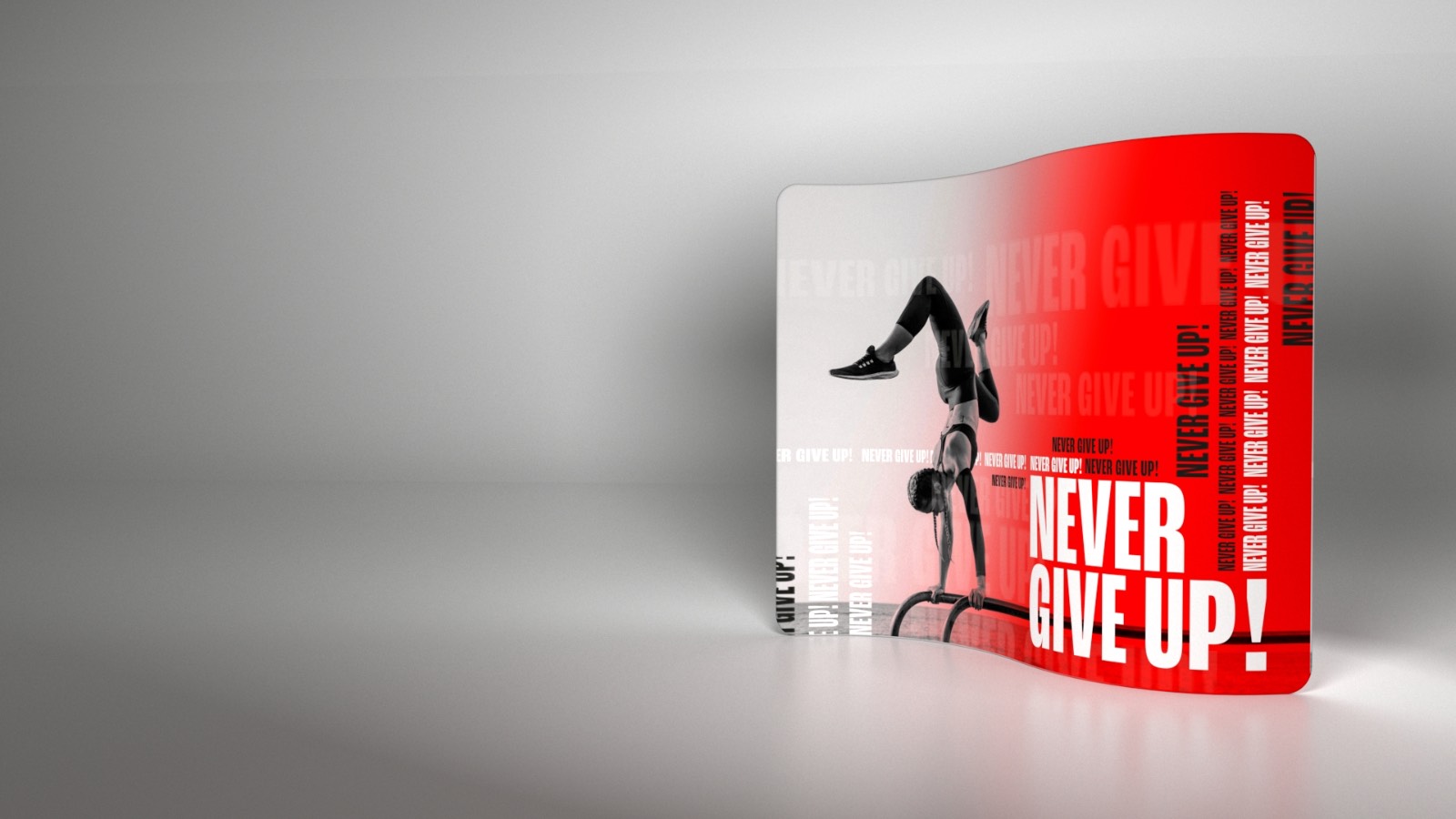 As configurações de exposição mais eficazes não dependem de um único tipo de tela — elas combinam formatos para criar profundidade, camadas e hierarquia visual.
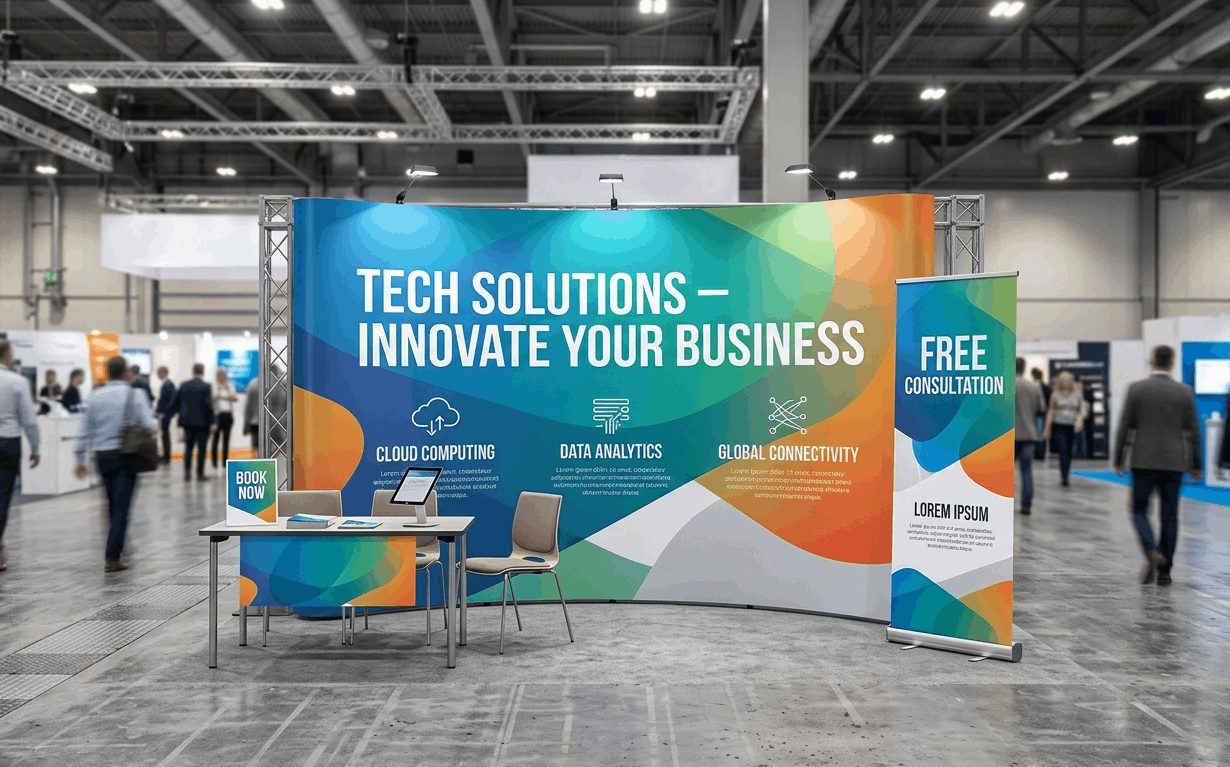
Uma configuração típica pode incluir um parede traseira de tensão do tecido como ponto focal principal, ladeado por banners roll-up para mensagens secundárias. Adicione um contador na frente para interação com os visitantes, e talvez um expositor suspenso Se o local permitir, instale o estande em camadas, acima da cabeça. Essa abordagem garante que seu estande seja visível à distância e atraente de perto.
Em ambientes de varejo, os banners roll-up funcionam bem dentro da loja para promoções e sinalização, enquanto bandeiras e placas de pavimento Gerenciar a visibilidade externa. Cada formato desempenha um papel específico e, juntos, criam uma presença de marca coesa em diversos pontos de contato.
Considerações finais
Não se prenda à terminologia. Seja chamado de pop-up, pull-up ou roll-up, o que importa é se ele se adequa ao seu ambiente, à sua mensagem e à sua logística. Concentre-se na qualidade da construção, na possibilidade de substituição dos elementos gráficos e em como o display se encaixa na sua estratégia geral de exposição ou varejo.
Veja a gama completa de banners roll-up, sistemas de exibição, e estandes de exposição Visite Displayproducts.eu para encontrar a combinação ideal para o seu próximo evento.